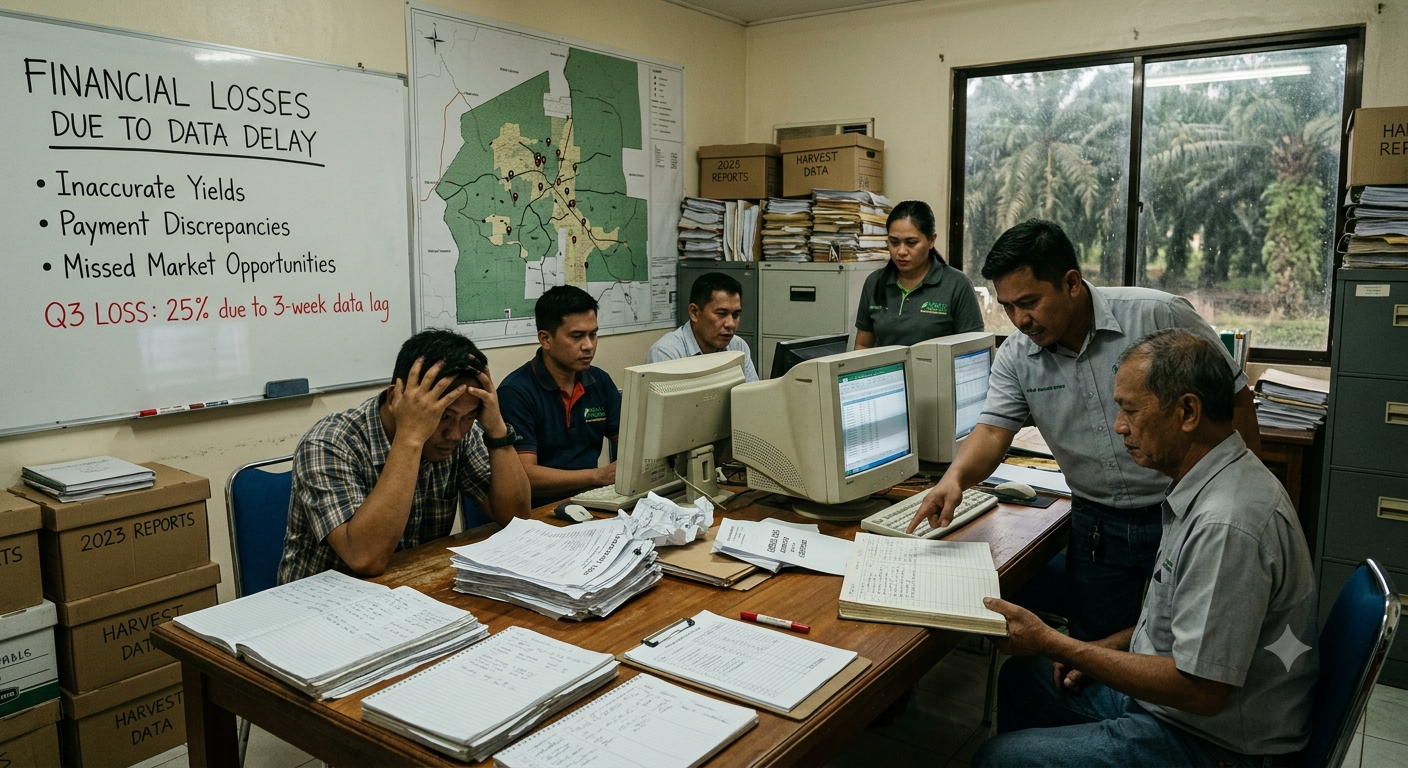
Sebagian besar manajer perkebunan menerima laporan setelah masalah terjadi — setelah kerugian tanaman sudah dimulai, setelah risiko kebakaran gambut meningkat, atau setelah pelanggaran kepatuhan dilaporkan oleh regulator. Pada saat itu, kerusakan sudah terjadi.
Bagaimana Jika Anda Tahu Sebelumnya?
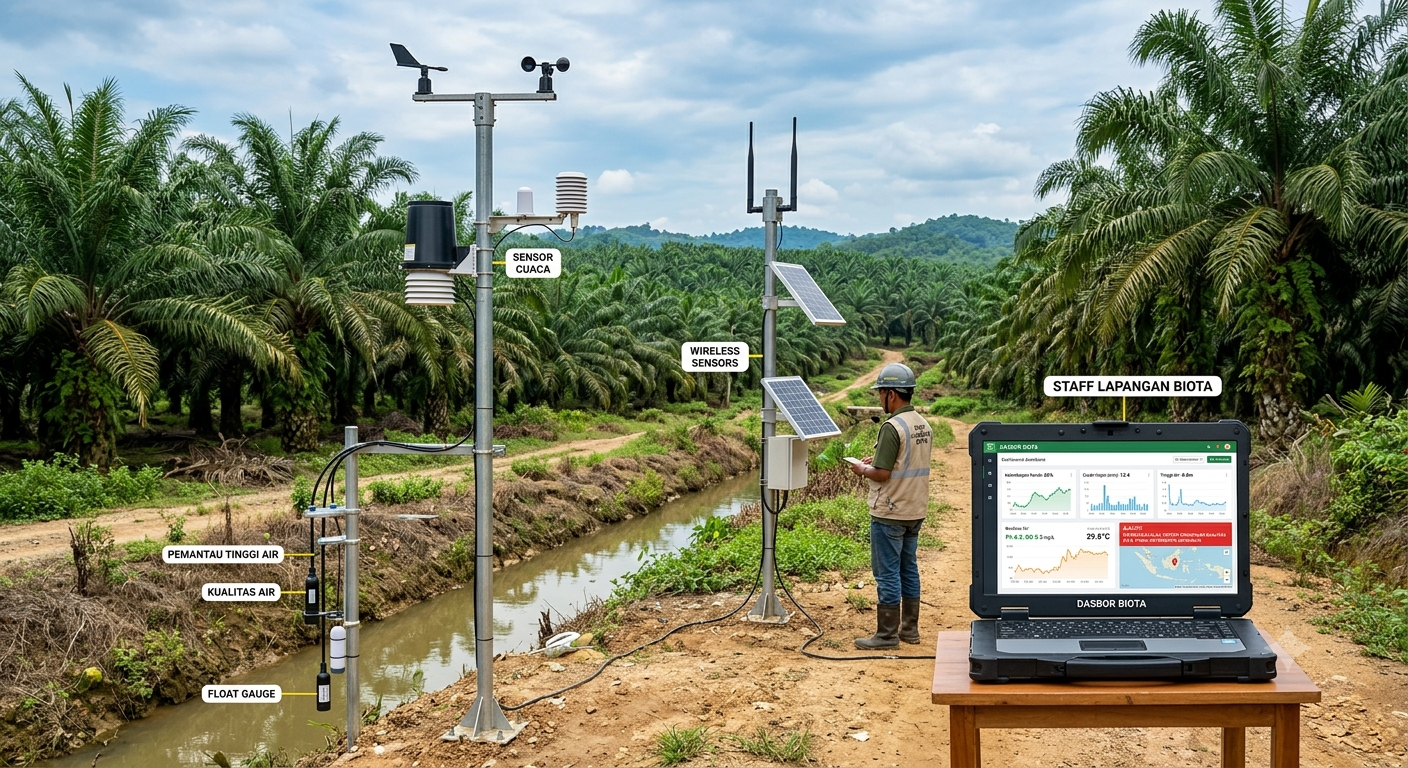
Sensor IoT yang terhubung sedang mengubah cara perkebunan beroperasi. Stasiun cuaca otomatis, sensor ketinggian air, dan monitor kualitas air sekarang mendeteksi pelanggaran ambang batas secara real time — bukan hari atau minggu kemudian. Ketika ketinggian air melebihi batas aman atau lonjakan suhu sinyalikan potensi risiko kebakaran, manajer menerima peringatan instan melalui dashboard Biota.
Cara Peringatan Prediktif Bekerja
- Pemantauan Berkelanjutan: Sensor yang ditempatkan di seluruh perkebunan mengumpulkan data 24/7, menghilangkan celah antara putaran inspeksi manual.
- Peringatan Berbasis Ambang Batas: Aturan peringatan yang dapat disesuaikan memberi tahu manajer saat pembacaan menyimpang dari parameter yang diharapkan — dalam hitungan menit, bukan hari.
- Kecerdasan yang Dapat Ditindaklanjuti: Peringatan mencakup data lokasi, tingkat keparahan, dan respons yang direkomendasikan agar tim dapat bertindak cepat.
- Analisis Tren Historis: Seiring waktu, data sensor mengungkap pola yang membantu memprediksi masalah sebelum terjadi — manajemen yang benar-benar proaktif.
Dampak Bisnis
Intervensi dini mengurangi kerugian tanaman, mencegah degradasi lahan gambut, dan menyederhanakan pelaporan kepatuhan regulasi. Perkebunan yang beralih dari pemantauan reaktif ke proaktif melaporkan lebih sedikit respons darurat, biaya kepatuhan yang lebih rendah, dan alokasi sumber daya yang lebih efisien.
Perbedaan antara menanggapi kerusakan dan mencegahnya adalah data real time. Solusi pemantauan IoT Avirtech memberikan hal itu — mengubah umpan sensor mentah menjadi kecerdasan yang dapat ditindaklanjuti untuk operasi perkebunan.