How one plantation reduced monitoring costs by 40 percent — without reducing coverage.
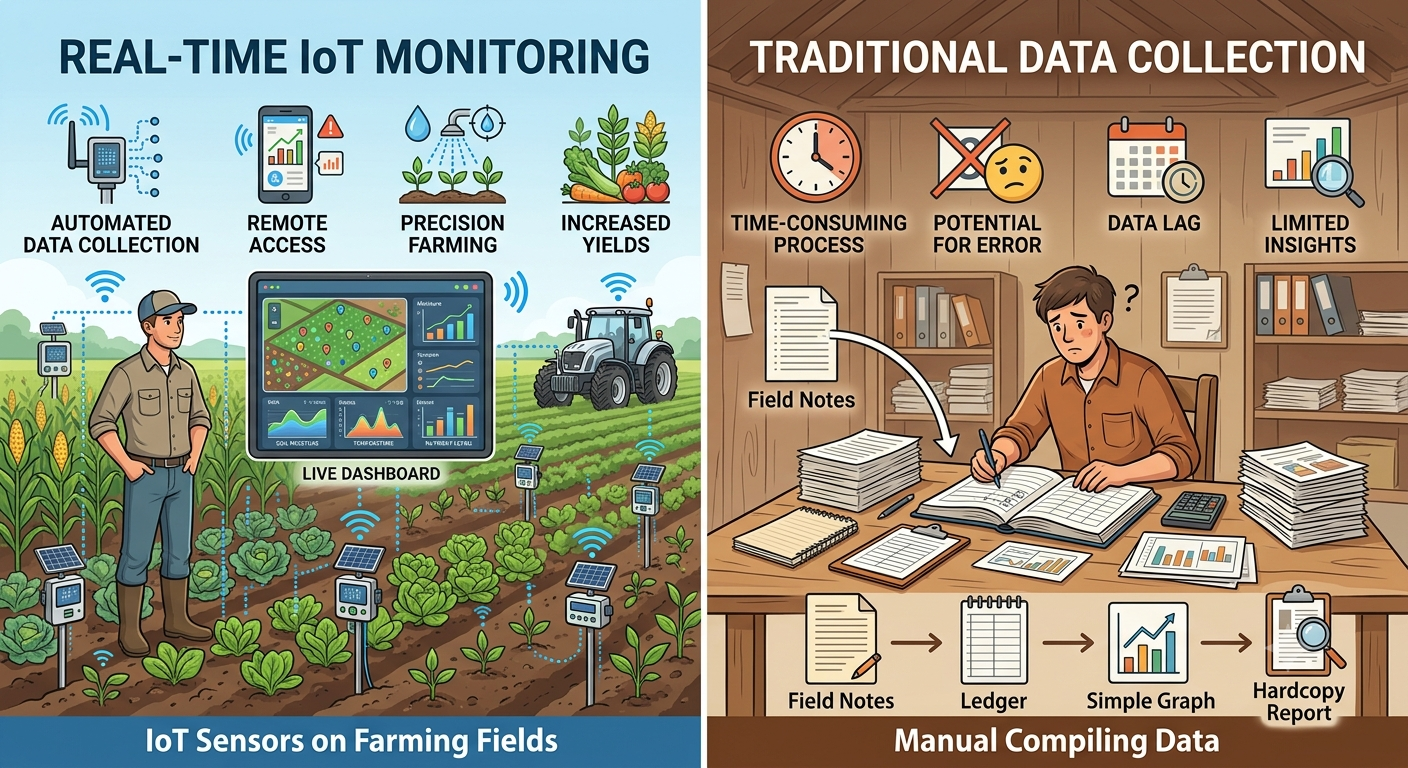
Manual monitoring across large estates is expensive. It requires dedicated teams, vehicles, fuel, and weekly site visits to every monitoring point. The costs add up quickly: labor, vehicle maintenance, and the hidden cost of data that arrives too late to act on. When a water level breach isn't caught for a week, the damage is already done.
Transforming Operations with IoT Sensors and the Biota Platform
One plantation operation decided to quantify what would happen if they replaced manual monitoring with IoT sensors connected through the Biota platform. The results challenged every assumption about the cost of precision agriculture.
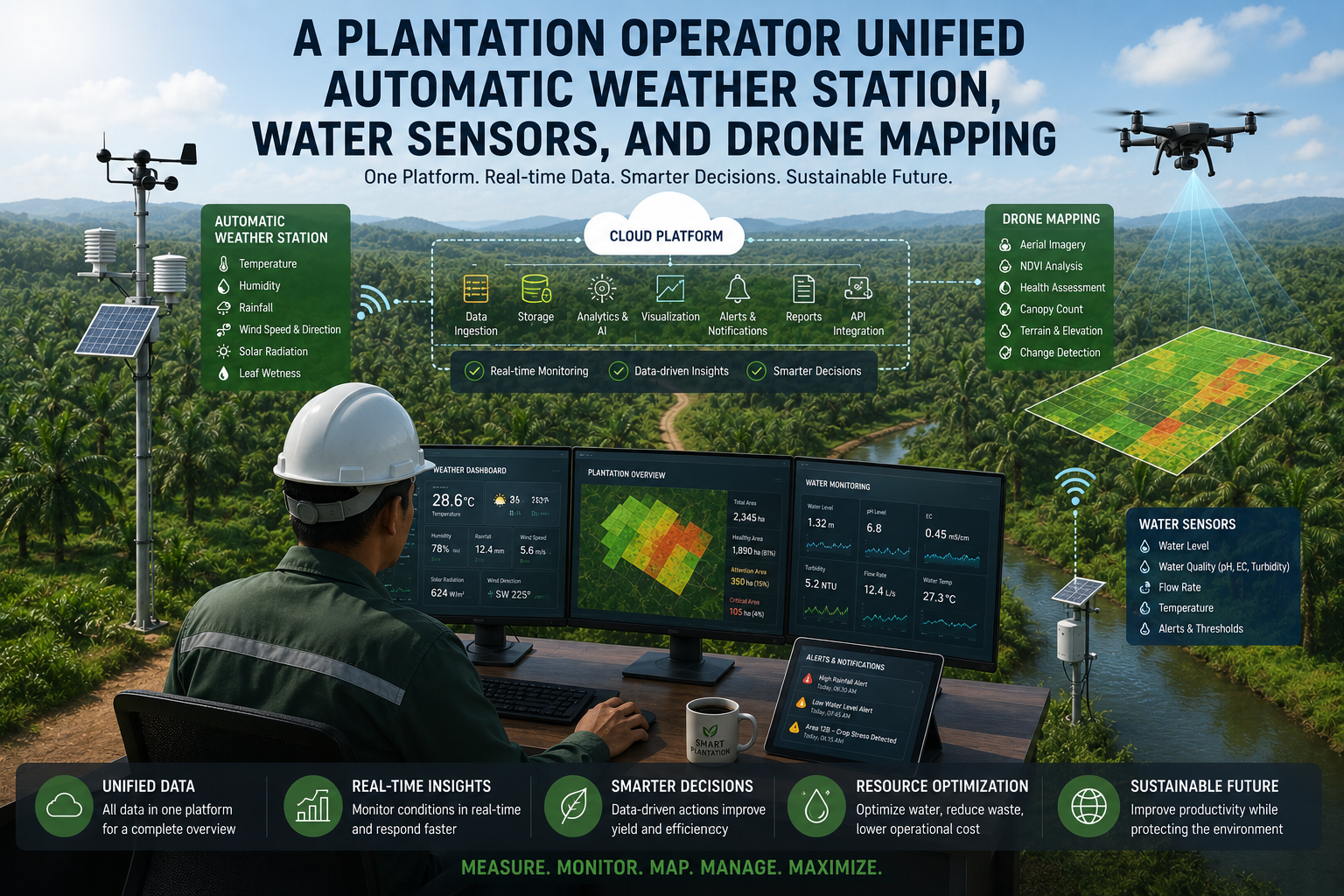
After deploying Automatic Weather Stations, water level sensors, and water quality probes across their estate — all feeding into Biota — the plantation achieved a 40 percent reduction in monitoring labor costs. But the real story is in the details.
A Fundamental Shift in Operational Visibility
Coverage actually increased. Instead of one reading per site per week, sensors transmitted data every hour. The operation went from 52 readings per sensor per year to 8,760. That's not a marginal improvement — it's a fundamental shift in operational visibility.
Automated alerts replaced manual review. Managers no longer needed teams compiling and cross-referencing spreadsheets. The system flagged anomalies automatically, directing human attention only where it was needed. Data quality improved simultaneously because automated collection eliminated transcription errors and missed readings.
The Business Case for Precision Agriculture
The business case for precision agriculture is not theoretical. It's measurable, repeatable, and achievable with the right technology stack. The question isn't whether you can afford to digitize monitoring — it's whether you can afford not to.