The Challenge of Fertilizer Application in Forestry Operations
Fertilizer application in forestry environments presents a unique set of operational challenges. Unlike structured plantation layouts, forestry areas are often characterized by dense vegetation, uneven terrain, peat zones, and limited accessibility. These conditions make it difficult to execute consistent and efficient fertilizer distribution using conventional methods.
Forestry operations that require nutrient enhancement, soil conditioning, or growth optimization must ensure that fertilizer is distributed evenly across large areas. However, achieving this at scale is complex due to logistical constraints and environmental limitations.
Manual application is slow and labor-intensive, while ground-based machinery is often restricted by terrain conditions and may cause unnecessary disturbance to the environment. As forestry operations scale, the need for a more efficient, controlled, and measurable fertilizer distribution method becomes increasingly important.
Limitations of Conventional Fertilizer Application Methods
Traditional fertilizer application in forestry environments typically relies on manual labor or limited ground equipment. These approaches introduce several inefficiencies:
Restricted access in dense or waterlogged terrain
High labor requirements for large-area coverage
Inconsistent distribution, leading to uneven nutrient availability
Slow execution speed, delaying operational cycles
Limited traceability, making it difficult to verify application coverage
In many cases, areas that are difficult to access are either under-treated or skipped entirely, resulting in inconsistent growth and reduced effectiveness of fertilizer programs.
Aerial Fertilizer Spreading as a Scalable Solution
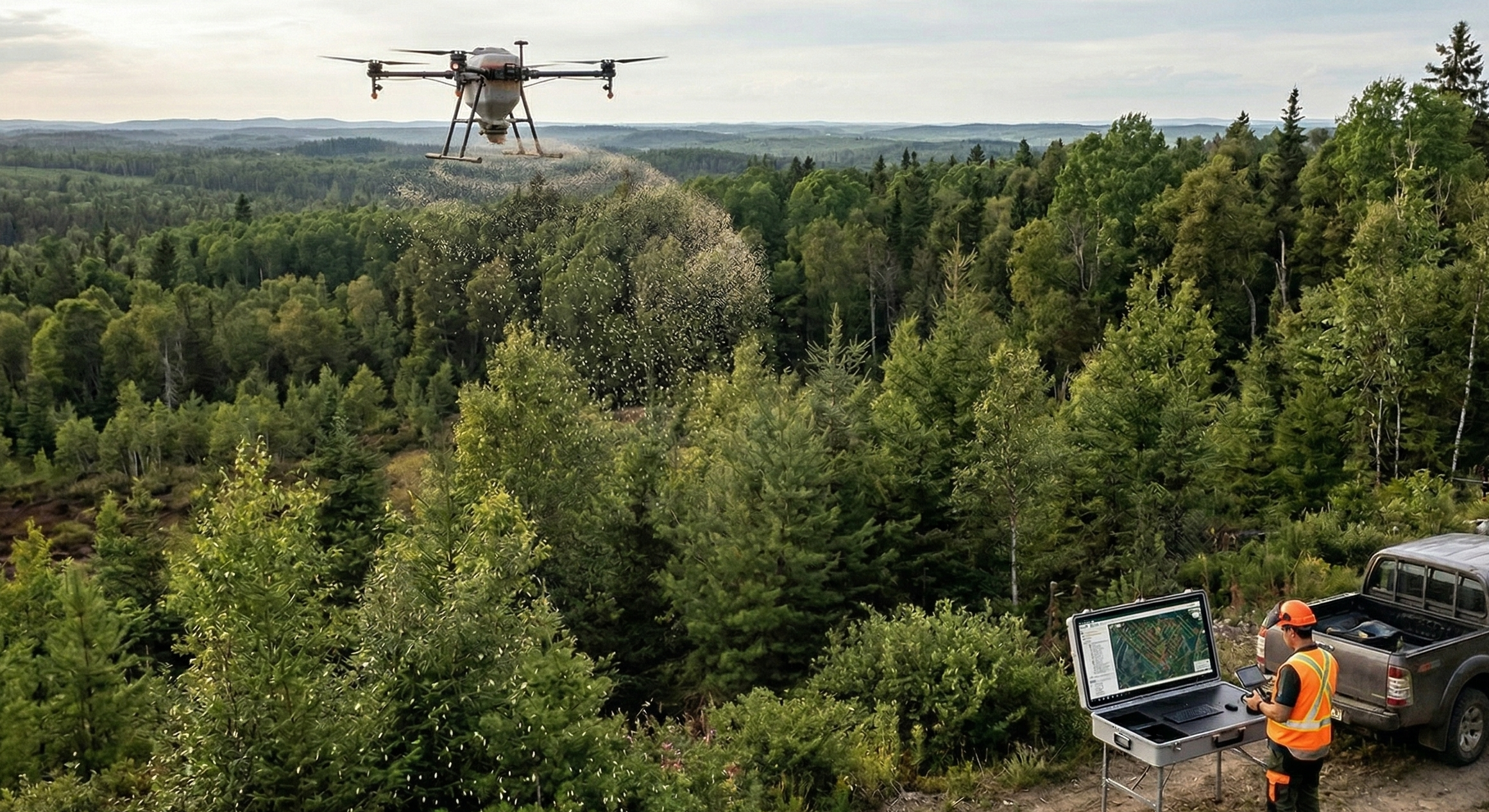
Drone-based aerial spreading provides a practical alternative for fertilizer distribution in forestry environments. By operating above the canopy, drones can bypass terrain limitations and deliver fertilizer across large areas with consistent coverage.
This approach enables:
Uniform fertilizer distribution across defined operational zones
Rapid coverage of large areas without reliance on ground access
Reduced manpower requirements compared to manual methods
Minimal environmental disturbance, as no heavy machinery is required
Repeatable and trackable operations through digital flight systems
Aerial spreading transforms fertilizer application into a controlled and scalable process, suitable for large forestry concessions.
Positioning High-Capacity Drone Systems for Forestry Fertilizer Application
High-capacity aerial platforms such as the Aviro H50 are designed to support demanding field operations that require both payload capability and operational efficiency.
While commonly associated with agricultural applications, the system is highly effective for fertilizer spreading in forestry environments, where large coverage areas and difficult terrain require a combination of capacity, stability, and mobility.
The Aviro H50 enables forestry operators to execute fertilizer programs with greater consistency and efficiency, making it a practical solution for large-scale nutrient management.
Technical Capabilities of the Aviro H50 for Fertilizer Spreading
The H50 platform combines high payload capacity with precise control systems, making it suitable for aerial fertilizer distribution in complex environments.
Core Platform Specifications
Tank Capacity: 50L liquid / 60L granular
Number of Rotors: 4-rotor configuration for stable flight
Maximum Flight Speed: Up to 12 m/s
Flight Radius: Up to 1.5 km
Effective Working Time: 7–8 minutes per flight
Area Efficiency: Up to 20 hectares per hour
These specifications allow the system to cover large forestry areas efficiently while maintaining operational stability.
Fertilizer Spreading Capabilities
Granular Spreading Module: Supports up to 60L fertilizer load
Adjustable Release Mechanism: Enables controlled and consistent distribution
Operational Speed: 3–10 m/s depending on terrain and density
Flight Height: 1.5–4 meters above canopy
Swath Width: 6–12 meters per pass
This allows operators to calibrate fertilizer application based on field requirements, ensuring consistent nutrient distribution.
Control and Automation Features
Flight Modes: Manual, A-B mode, waypoint navigation, KML route planning and spot spreading capabilities (tree level)
Auto Return-to-Home: Activated when battery or payload reaches threshold
FPV with Night Mode: Enables operation in low-visibility conditions
Optional RTK Support: Improves positional accuracy for precise coverage
These features ensure that fertilizer spreading operations are not only efficient but also repeatable and verifiable.
Operational Workflow of Aerial Fertilizer Spreading
The H50 supports a structured workflow that ensures consistent execution across forestry areas:
Area Mapping and Planning
Forestry zones are mapped, and fertilizer application areas are defined based on operational requirements.
Payload Preparation
Granular fertilizer is loaded into the spreading module, and release settings are calibrated.
Flight Path Configuration
Operators define waypoint routes or A-B paths to ensure systematic coverage.
Automated Spreading Operation
The drone executes the flight plan, distributing fertilizer at controlled intervals across the designated area.
Monitoring and Data Logging
Flight data, coverage area, and operational parameters are recorded for verification and analysis.
Ensuring Uniform Fertilizer Distribution
Uniformity is critical in fertilizer application to ensure consistent nutrient availability across the field. The H50 achieves this through:
Controlled release mechanisms that regulate fertilizer flow
Consistent flight parameters to maintain even coverage
Defined swath width to avoid overlaps and gaps
Automated routes that ensure full area coverage
This reduces variability in application and improves overall effectiveness of fertilizer programs.
Operational Efficiency in Forestry Environments
Aerial fertilizer spreading significantly improves operational efficiency compared to traditional methods.
Faster Execution
With the ability to cover up to 20 hectares per hour (depends on fertilizer dosage), the H50 allows operators to complete fertilizer application cycles much faster than manual methods.
Reduced Labor Dependency
Automated flight operations reduce the need for large field teams, lowering labor costs and simplifying logistics.
Accessibility in Difficult Terrain
The system can operate in areas that are otherwise inaccessible, ensuring that all zones receive consistent treatment.
Scalable Deployment
Multiple units can be deployed simultaneously to cover even larger areas, enabling efficient scaling of operations.
Field Scenario: Fertilizer Application in Remote Forestry Zones
In a typical operation, the H50 is deployed over a forestry block requiring nutrient application. The operator defines the coverage area and sets the appropriate spreading parameters.
The drone follows a predefined route, maintaining consistent altitude and speed while distributing fertilizer evenly across the area. Because the system operates above the canopy, it avoids terrain-related limitations and ensures continuous coverage.
After completing the mission, operators review flight logs to verify coverage and confirm that fertilizer has been applied uniformly across the designated zone.
Long-Term Benefits of Aerial Fertilizer Spreading
The adoption of high-capacity aerial spreading systems provides several long-term advantages:
Improved consistency in fertilizer application
Reduced operational costs through efficiency gains
Enhanced coverage across difficult terrain
Better resource utilization and reduced waste
Scalable operations for large forestry areas
By improving both execution and control, aerial systems enable more effective nutrient management in forestry environments.
Conclusion: Advancing Forestry Fertilizer Application Through Aerial Systems
Fertilizer application in forestry environments requires solutions that can overcome terrain limitations while maintaining efficiency and consistency. High-capacity aerial spreading systems such as the H50 provide a practical and scalable approach to meeting these requirements.
By combining payload capacity, precise control, and automated workflows, the H50 enables forestry operators to execute fertilizer programs with greater speed, accuracy, and accountability. As forestry operations continue to scale, aerial fertilizer spreading is becoming an essential tool for improving productivity and operational performance in complex environments.
Related blog posts
Products⎯Apr 03, 2026
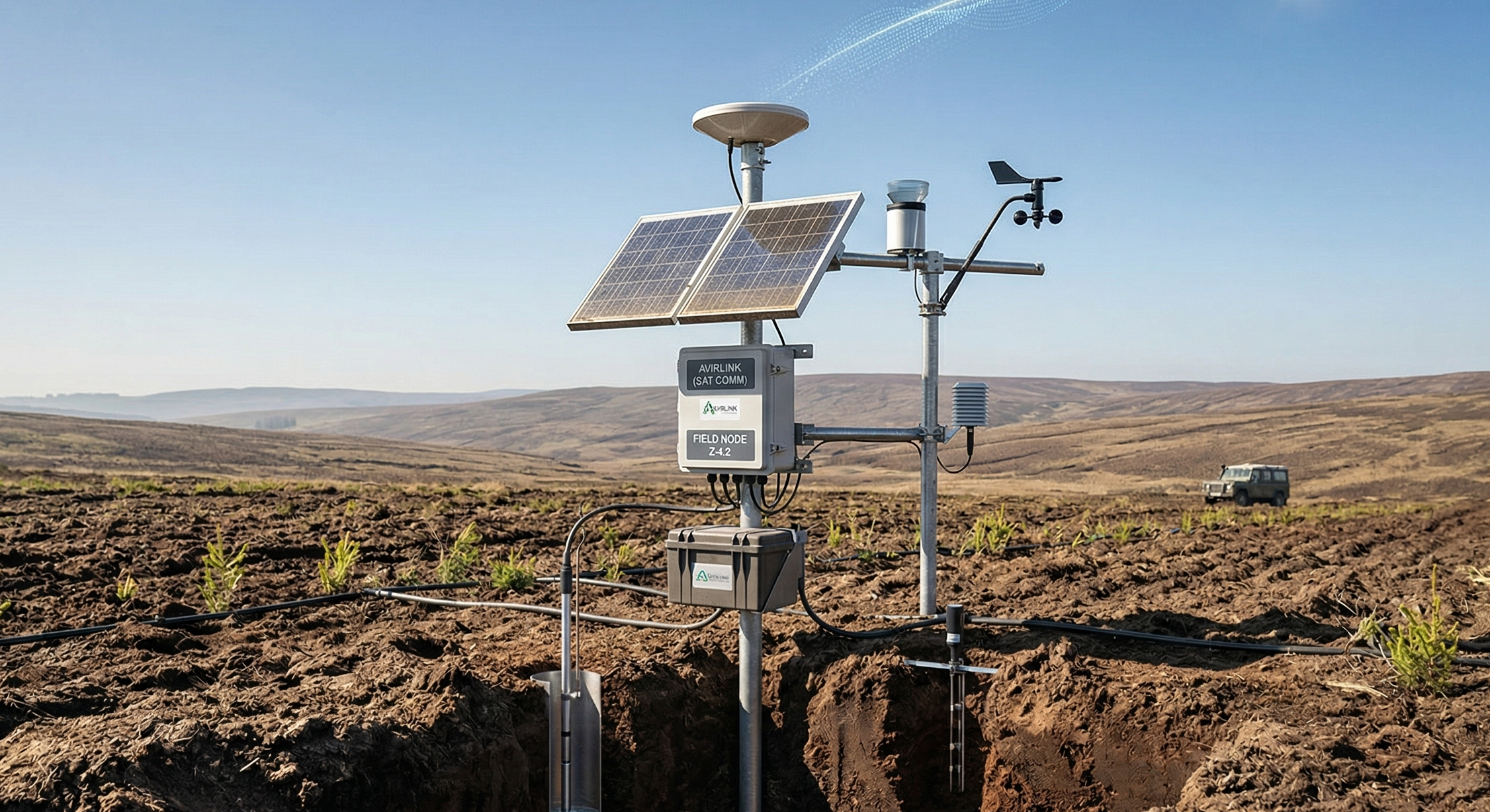
Enabling Remote Field Connectivity with Satellite Telemetry for Continuous Environmental Monitoring
Products⎯Mar 28, 2026
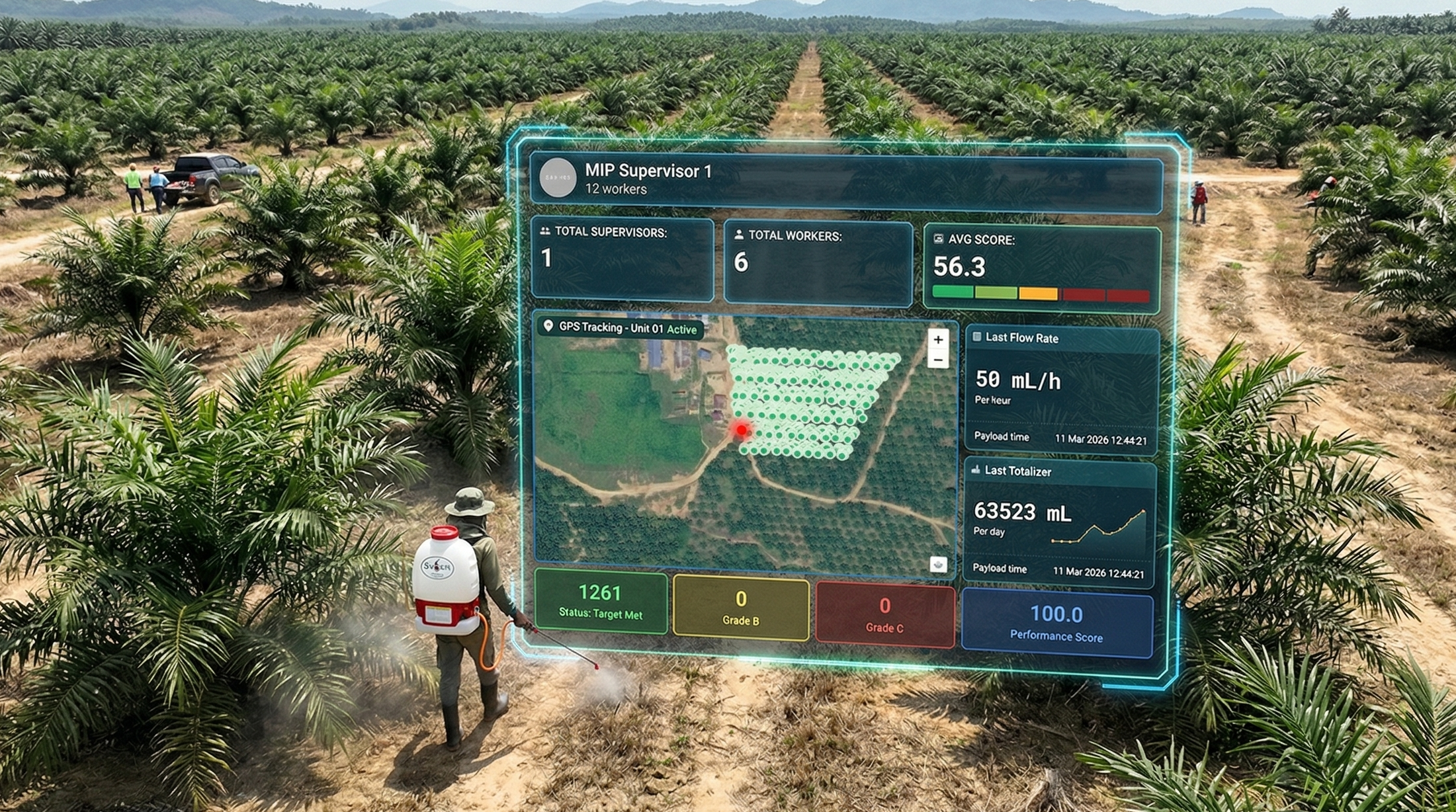
Enhancing Manual Spraying Operations with IoT-Enabled Smart Knapsack Systems for Accountability and Precision

Products⎯Mar 28, 2026
Managing Water Table (TMAT) in Plantation Environments Using Sensor-Based Monitoring Systems