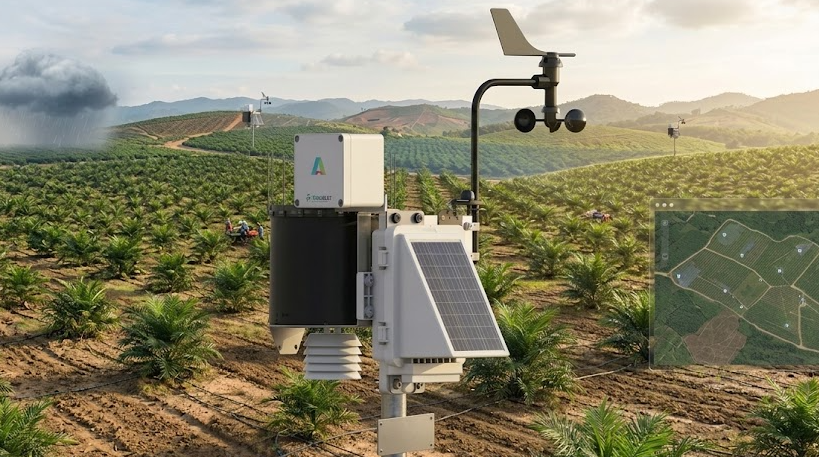
The Foundation of Data-Driven Plantation Management
Effective plantation management depends on accurate environmental data. Weather conditions influence nearly every field operation, including irrigation, fertilization, spraying, and harvesting. When decisions are based on incomplete or non-representative data, operational efficiency and outcomes are affected.
An Automatic Weather Station (AWS) provides structured environmental monitoring directly from the field. Instead of relying on generalized data, plantation operators can base decisions on actual conditions from specific areas within the estate, improving both accuracy and consistency in operations.
The Challenge of Non-Representative Weather Data
In many plantation environments, weather data is typically collected from centralized locations such as offices or nearby facilities where power and connectivity are available. While convenient, this approach introduces a critical limitation.
Environmental conditions can vary significantly across different parts of a plantation due to:
Differences in elevation and terrain
Variations in soil type and moisture
Localized rainfall patterns
Microclimate differences between blocks
As a result, data collected from a single location often does not accurately represent conditions across the entire plantation.
This leads to:
Misaligned irrigation schedules
Ineffective spraying operations
Inconsistent fertilizer application outcomes
Reduced ability to manage localized risks
To improve decision-making, data must be collected exactly where operations take place, not just where infrastructure is available.
AWS as a Field-Based Environmental Monitoring System
An Automatic Weather Station (AWS) addresses this gap by enabling environmental data collection directly within the plantation area. The system monitors key parameters such as temperature, humidity, rainfall, wind conditions, solar radiation, and pressure.
In addition, AWS can be configured with other modular sensors to capture:
Soil moisture and soil temperature
Water level or water table conditions
Leaf wetness
Water quality indicators
This flexibility allows the system to be adapted to different crops, terrains, and operational needs.
Enabling Micro-Area Measurement Across the Plantation
A critical capability of AWS is its ability to perform location-specific environmental measurement, allowing operators to monitor conditions at precise points within the plantation.
Instead of relying on a single centralized data source, AWS can be deployed directly in targeted field locations, enabling what can be described as micro-area measurement.
This means:
Data is collected exactly where decisions need to be applied
Each station represents the actual condition of a specific block or zone
Variations across the plantation can be identified and managed more effectively
This approach significantly improves the accuracy of operational decisions, especially in large plantations where environmental conditions are not uniform.
Overcoming Power and Connectivity Constraints with Avirlink
One of the main challenges in deploying monitoring systems in remote areas is the lack of reliable power and internet connectivity. This often limits data collection to easily accessible locations.
AWS overcomes this limitation through an integrated telemetry system powered by Avirlink, which enables data transmission from virtually any location within the field.
Key enabling features include:
Solar-powered operation, eliminating dependence on grid electricity
Rechargeable battery backup for continuous functionality
Satellite and LoRaWAN connectivity, allowing data transmission without reliance on cellular networks
With this architecture, AWS can be installed in remote, infrastructure-limited areas while still maintaining consistent data availability.
This allows plantation operators to monitor the exact locations that matter, rather than being constrained by where power and internet are available.
Technical Capabilities and Measurement Accuracy
AWS provides high-precision environmental measurements across multiple parameters:
Air Temperature: -40°F to 257°F with ±0.54°F accuracy
Humidity: 10% to 100% with ±2% accuracy
Rainfall: 0.254 mm resolution with ±2% accuracy
Wind Speed: 0.1 to 200 mph with ±5% accuracy
Wind Direction: 0 to 359° with ±3° accuracy
Solar Radiation: 0 to 1500 W/m² with ±5% accuracy
Barometric Pressure: 880 to 1083 hPa with ±1.7% accuracy
Optional soil sensors provide:
Volumetric Water Content (VWC): 0% to saturation (±3%)
Electrical Conductivity (EC): 0 to 10 mS/cm (±2%)
Soil Temperature: -18°C to 50°C (±0.8°C)
These specifications ensure that environmental data collected from each location is both accurate and reliable.
Structured Data Collection and Operational Consistency
AWS systems operate with predefined data logging intervals, typically ranging from 5 to 15 minutes (LoRaWAN) or 3 to 8 hours (using satellite). This ensures consistent data collection over time, allowing plantation operators to build reliable datasets for analysis.
Key operational characteristics include:
Automated data logging at fixed intervals
Continuous operation supported by solar power
Secure data transmission via integrated connectivity systems
Flexible mounting options based on field conditions
This structured approach ensures that data remains consistent, comparable, and usable for decision-making.
Supporting Key Plantation Operations
Accurate field-based environmental data supports multiple plantation activities:
Irrigation Management
Soil moisture and climate data help determine appropriate irrigation timing and volume for specific areas.
Spraying Operations
Wind and humidity data enable better planning of spraying activities, improving effectiveness and reducing loss.
Fertilizer Application
Environmental conditions influence nutrient absorption, allowing more precise timing and placement.
Risk Monitoring
Localized data helps identify potential risks such as drought stress, flooding, or extreme weather exposure.
By aligning operations with actual field conditions, plantations can improve both efficiency and outcomes.
Scalability Across Plantation Areas
AWS systems can be deployed across multiple locations within a plantation to provide broader coverage. Each unit represents a specific zone, allowing operators to monitor variations across different blocks.
This enables:
Better understanding of microclimate differences
More precise operational planning
Improved allocation of resources
Consistent monitoring across large areas
Scalable deployment ensures that monitoring is not limited to a single point, but distributed across the plantation.
Integration with Broader Monitoring Systems
AWS can be integrated with other field technologies to create a comprehensive monitoring ecosystem. By combining environmental data with other datasets, plantation managers can gain deeper insights into field conditions.
This supports:
Cross-referencing environmental and operational data
Improved coordination between field activities
Enhanced decision-making processes
Such integration forms the basis of a connected and data-driven plantation system.
Long-Term Benefits of Field-Based AWS Deployment
Deploying AWS directly in the field provides several long-term advantages:
Improved accuracy of environmental data
Better alignment between data and operational decisions
Reduced dependency on centralized monitoring points
Enhanced ability to manage localized conditions
Increased efficiency in plantation operations
By shifting from centralized to distributed monitoring, plantation operators gain a more accurate and actionable understanding of their environment.
Conclusion: Advancing Plantation Intelligence with Field-Deployed AWS
Automatic Weather Stations (AWS) enable plantation operators to move beyond generalized data and adopt a more precise, location-based approach to environmental monitoring. By allowing deployment directly in the field, AWS ensures that data reflects actual conditions where operations take place.
With the support of integrated telemetry systems, AWS can function in remote areas without dependence on power or internet infrastructure. This capability enables true field-level monitoring, supporting more accurate, consistent, and effective plantation management.
As plantations continue to scale and evolve, field-deployed AWS systems will play a critical role in improving decision-making and operational performance.
Related blog posts
Products⎯Mar 28, 2026
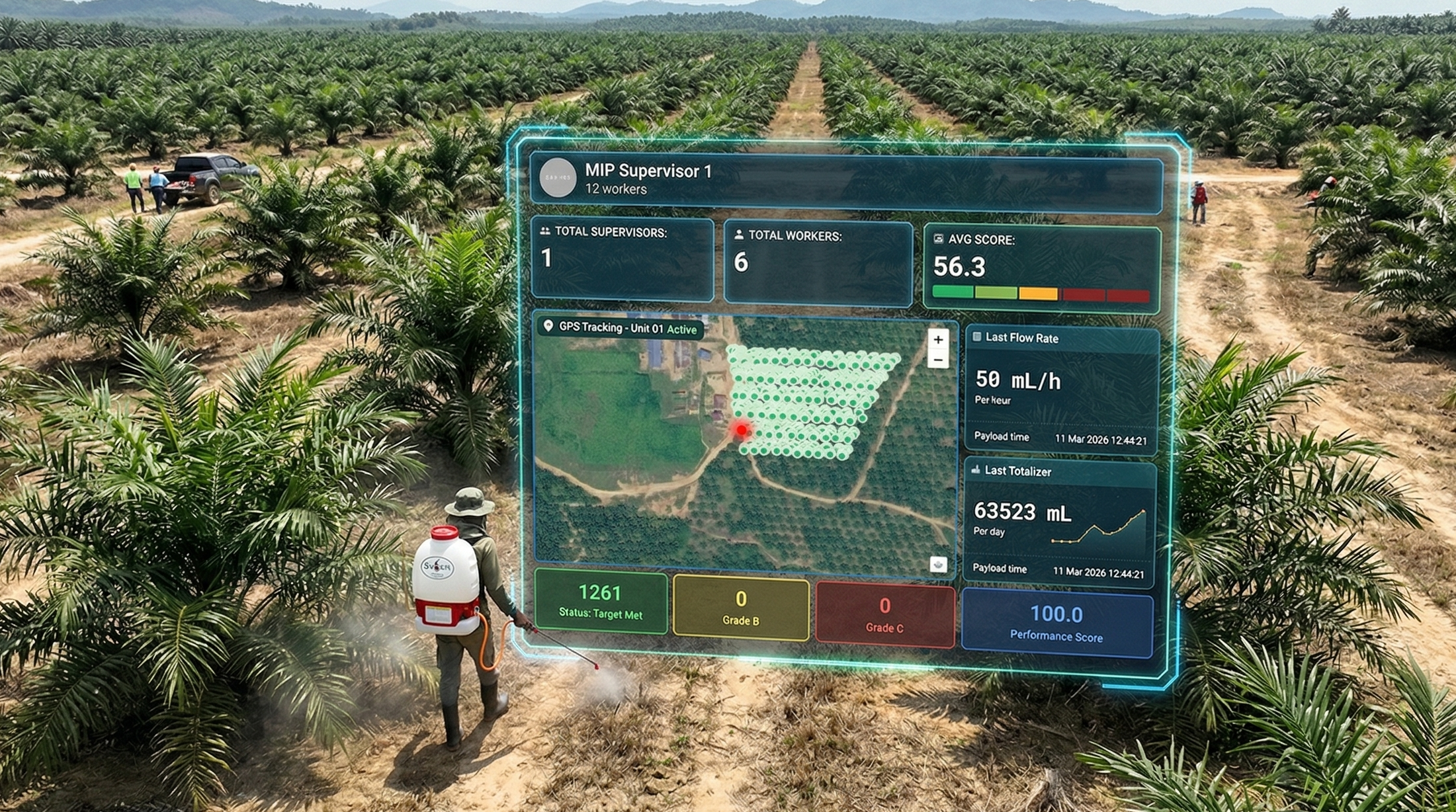
Enhancing Manual Spraying Operations with IoT-Enabled Smart Knapsack Systems for Accountability and Precision
Products⎯Mar 28, 2026
Managing Water Table (TMAT) in Plantation Environments Using Sensor-Based Monitoring Systems
Products⎯Mar 28, 2026
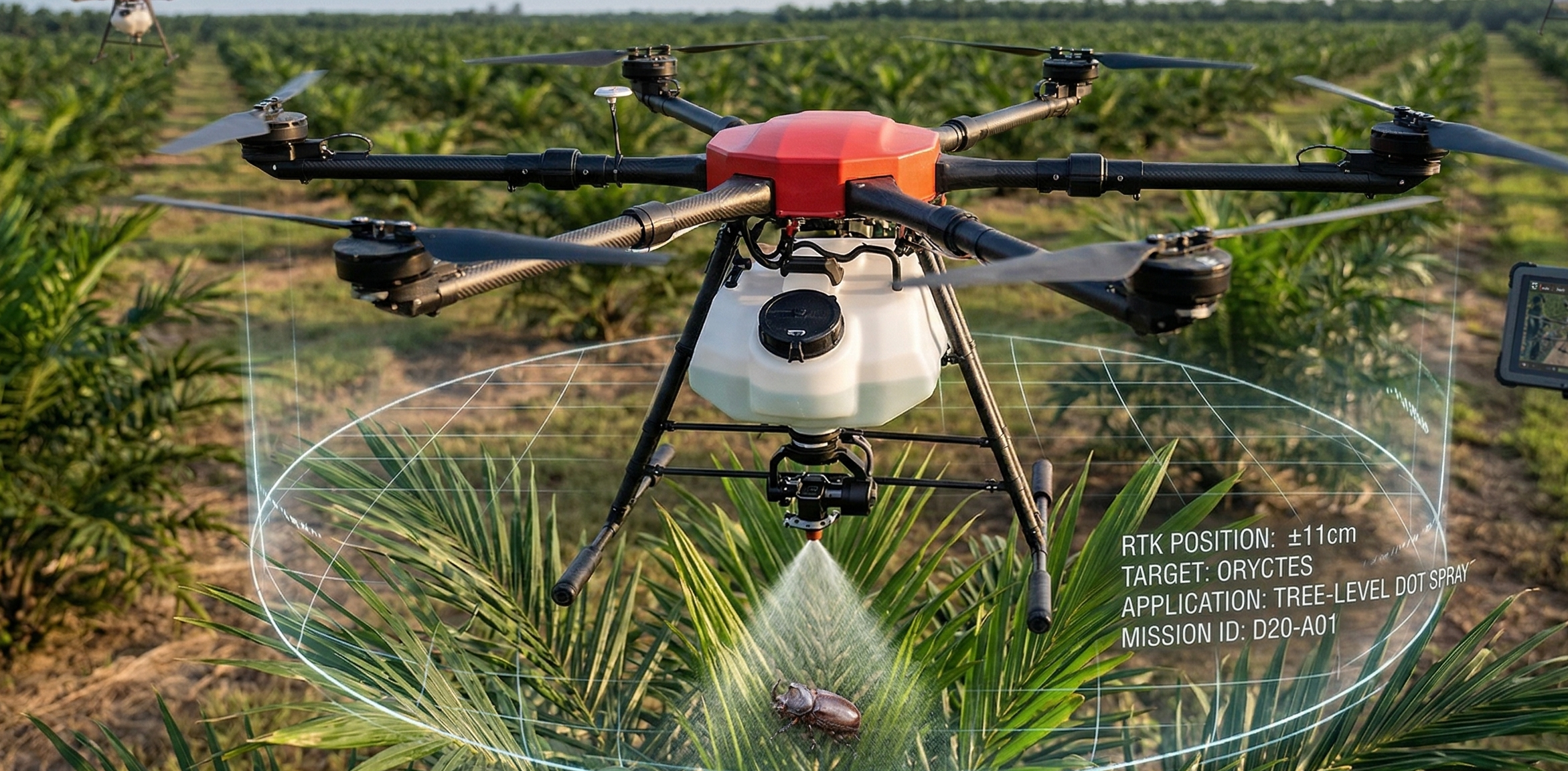
Enhancing Oryctes Control in Oil Palm Using the Aviro D20 Precision Drone Spraying System